PLC Programmers: 5 Essential Skills for Offshore Oil Rig Automation
- January 12, 2026
- Posted by: amol pharos
- Category: Uncategorized
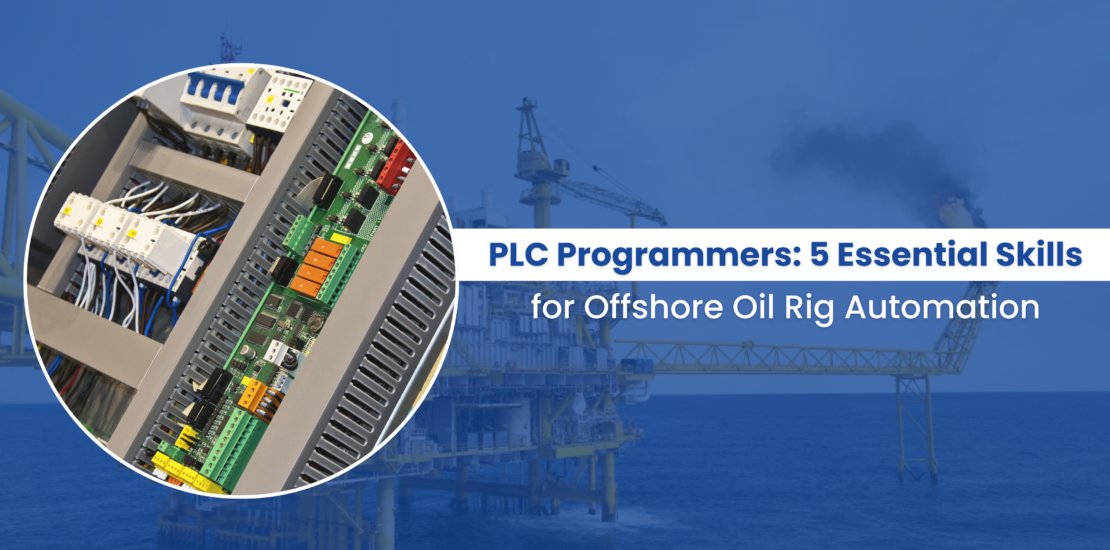
PLC programmers for offshore rigs must master functional safety standards (IEC 61508), redundancy protocols, and legacy system integration to ensure continuous production and personnel safety in isolated MENA marine environments.
Key TakeAways:
- Safety First: Mastery of Safety Instrumented Systems (SIS) is non-negotiable.
- Redundancy: High availability skills prevent costly offshore downtime.
- Communication: Proficiency in Modbus and OPC UA ensures seamless data flow.
- Cybersecurity: Protecting isolated rig networks from external threats.
- Troubleshooting: Advanced diagnostic skills for remote, high-pressure environments.
1. Mastery of Functional Safety Standards (IEC 61508/61511)
In the GCC oil and gas sector, safety is the primary KPI. A standard PLC programmer focuses on logic flow, but an offshore specialist must design for failure. Understanding Safety Integrity Levels (SIL) and implementing Safety Instrumented Systems (SIS) ensures that if a process goes critical, the rig shuts down safely.
Safety Protocol Comparison
| Protocol Attribute | Standard PLC Programming | Offshore Safety Programming |
| Objective | Process Efficiency | Personnel & Asset Safety |
| Standard | IEC 61131-3 | IEC 61508 / IEC 61511 |
| Failure Mode | Stops Process | Fails Safe (Predictable State) |
Citable Content: The International Electrotechnical Commission (IEC) states that adherence to IEC 61511 reduces industrial accidents by ensuring safety instrumented systems are designed and maintained correctly throughout their lifecycle.
2. Implementing High-Availability Redundancy
Offshore rigs in the Arabian Gulf operate in isolation. If a controller fails, you cannot simply drive a replacement part over. PLC programmers must be experts in configuring “Hot Standby” systems where a secondary processor takes over instantly (in milliseconds) without interrupting production.
Redundancy Configurations
| Type | Description | Switchover Time |
| Cold Standby | Backup is off; manual start required. | Minutes/Hours |
| Warm Standby | Backup is on but not synced. | Seconds |
| Hot Standby | Fully synced; instant takeover. | Milliseconds |
3. Advanced Industrial Communication Protocols
Modern rigs are a mesh of different technologies. A PLC programmer must bridge the gap between new sensors and legacy pumps. Proficiency in Modbus TCP/IP for legacy devices and OPC UA for modern SCADA integration is essential for the digital oilfield initiatives popular in Saudi Arabia and the UAE.
Protocol Usage in MENA Rigs
| Protocol | Primary Use Case | Reliability |
| Modbus RTU | Legacy Sensors & Serial Comms | High (Simple) |
| PROFINET | High-speed Motor Control | High (Deterministic) |
| OPC UA | Cloud/SCADA Data Reporting | High (Secure) |
Citable Content: A recent survey of industrial automation trends confirms that OPC UA is rapidly becoming the standard for interoperability in Industry 4.0, allowing secure communication from field devices to enterprise cloud systems.
4. Industrial Cybersecurity (IEC 62443)
As GCC countries digitize their oil infrastructure, rigs are becoming targets for cyberattacks. PLC programmers are now the first line of defense. It is no longer enough to write code; programmers must secure the controller by disabling unused ports, implementing firewalls, and managing user access rights strictly.
Security Layers for PLCs
| Layer | Action Required |
| Physical | Lock cabinets; restrict USB port access. |
| Network | Segmentation using VLANs; disable HTTP. |
| Application | Password-protect logic; validate inputs. |
5. Remote Diagnostics and Troubleshooting
When a helicopter trip to a rig costs thousands of dollars, the ability to diagnose issues remotely is invaluable. Top-tier PLC programmers build extensive diagnostic logic into their code, allowing onshore engineers in Dubai or Doha to see exactly which sensor triggered an alarm without visiting the site.
Diagnostic Tools Checklist
| Tool/Feature | Function | Benefit |
| Web Server | View PLC status via browser. | Quick access without software. |
| Data Logging | Store historical values. | Root cause analysis. |
| Watchdogs | Monitor program execution. | Detects freeze/loops. |
Conclusion
Hiring the right PLC programmer for offshore operations in the MENA region is about mitigating risk. It requires a specific blend of safety certification, redundancy expertise, and cybersecurity awareness.
Call to Action:
Do you need to upgrade the automation logic on your offshore assets? Leave a comment below or contact our specialist team to review your current PLC architecture.

